Representatives from the Zintan and Zuwara signed a binding agreement in Zuwara to end hostilities and promote peaceful coexistence. The parties pledged to stop identity-based arrests, secure sovereign roads within their borders, and guarantee safe civilian movement. They agreed to end hostile media campaigns, hold their members accountable for violations, and share intelligence to prevent...
CSVR | CENTRE FOR THE STUDY OF VIOLENCE AND RECONCILIATION
Gadgets
View All
Ring-fenced funding support and communities of practice are central to strengthening the media’s underestimated role in framing, refereeing and facilitating transitional justice in Africa, writes Makmid Kamara.
Ethiopia’s socio-political and economic crises are rooted in patronage and historically antagonistic ethnic, religious, and political relations. In 1895, Italy invaded Ethiopia, ensuing the first Italo-Ethiopian War. On 1 March 1896, Ethiopia overcame the invasion and won the war at the Battle of Adowa.[1] On 23 October 1896, the two warring parties signed the Treaty of Addis Ababa, ending the war and recognising Ethiopia as an independent state.

The strategies of civil society organisations that work closely with victims and survivors are key to the implementation and monitoring of transformative institutional reforms as part of transitional justice, writes Andrew Songa.
The Republic of Namibia gained its independence on 21 March 1990 after decades of colonial rule by Germany and later occupation by South Africa’s apartheid government. Before independence, Namibia saw grave violations of human rights, including the Nama and Herero genocide at the hands of German colonialists, the forced disappearances of thousands by South African forces, and the killings of an unknown number of Namibians accused of spying for South Africa by the liberation movement.
On 6 March 1957, Ghana gained independence from Britain, becoming the first country in sub-Saharan Africa to achieve independence from a European colonial power. Spearheading the African decolonial movement and Ghana’s colonial liberation, Francis Kwame Nkrumah, leader of the Convention People’s Party (CPP), served as the prime minister of independent Ghana from 1957 until 1960.
A former French and British colony, Seychellois society has been shaped by a history of slave labour and trade, resource exploitation, and racialised socioeconomic inequality. In 1756, the French administration occupied Seychelles. Following the end of the Napoleonic Wars, France was forced to give Seychelles to Britain as a condition of the Treaty of Paris of 1814, and the country was administered as a dependency of Mauritius. Like the French, the British profited from both economic and social exploitation based on slave labour. On 31 August 1903, Seychelles became a separate Crown colony, independent from Mauritius. It continued to be dependent on grants-in-aid from Britain until the 1960s.

Marketing
View All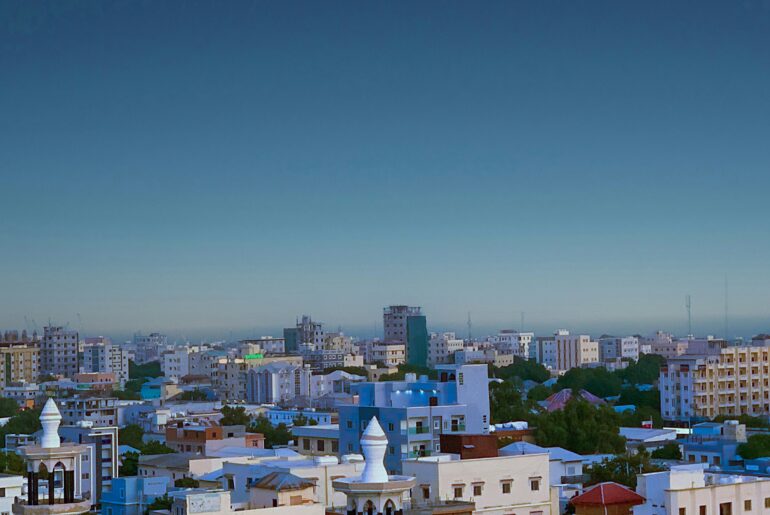
Lasting peace in Somalia requires addressing social grievances, healing past conflicts, and establishing a robust justice system, in addition to political reconciliation initiatives, writes Farhia Mohamud.