
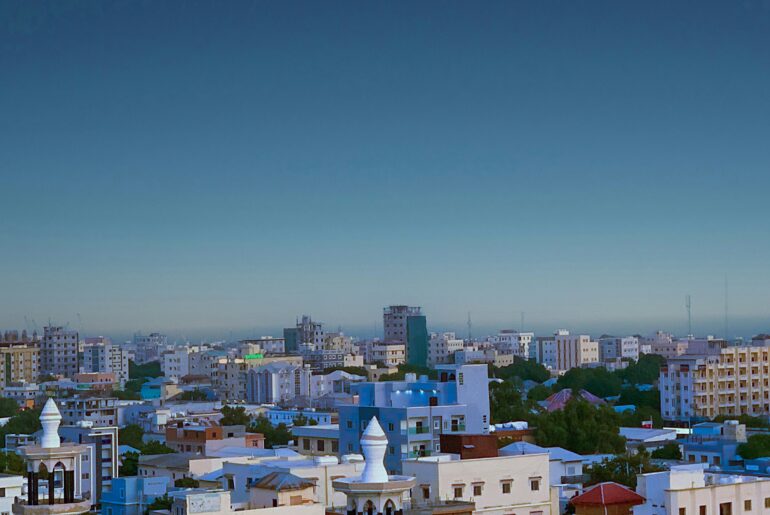
Lasting peace in Somalia requires addressing social grievances, healing past conflicts, and establishing a robust justice system, in addition to political reconciliation initiatives, writes Farhia Mohamud.
The Parties to the Ceasefire Agreement agreed to the screening of UNRF II ex-combatants and their families for suitability of integration either in the Uganda People’s Defence Force (UPDF) or civilian life after the conclusion of the peace process. The Parties agreed that the UNRF II would prepare an agenda for the peace talks and send it to the Government for input, after which the parties would convene a peace talks conference. The Parties agreed on return of foreign-based UNRF II leaders. The Parties agreed that following the signing of the peace agreement, a Stakeholder Conference would be organised to facilitate the rehabilitation and resettlement of UNRF II ex-combatants. The Parties agreed to a DDR process for combatants not integrated in the UPDF.
The Parties to the Agreement agreed to a ceasefire and in Appendix A the LRA undertook in conjunction with district authorities of Gulu and Kitgum to conduct public rallies in all counties for the purpose of explaining the peace process to the public. Further, they agreed that during this process two elders would be nominated from each division for the purpose of performing traditional cleansing rituals, after which a programme would be drawn up and the cleansing rituals undertaken.
The Parties to the Peace Agreement agreed to establish and sustain a system of Government acceptable to and endorsed by the people of Uganda. The Parties agreed to establish a National Resistance Council as an Interim Government, with appropriate representation of UPDM, which within the term of the present government would resolve itself into a Constituent Assembly and draw up a Popular National Constitution, protecting fundamental human rights. The Parties agreed to hold a National Referendum to enable the people of Uganda to decide on the issue of the Party System and system of Government, and agreed for the Interim Government to hold free and fair general elections. The Government would prioritise the election of Resistance Councils and Committees from village to district level in war-ravaged areas.
The Parties to the Peace Talks agreed on the establishment of a Military Council as the supreme organ of government in Uganda and consisting of representatives of the combatant forces, including Uganda National Liberation Army, National Resistance Army, Uganda Freedom Movement, Federal Democratic Movement, Former Uganda National Army and the Uganda National Rescue Front.
The Parties to the Memorandum recommitted to the 2006 Global Agreement and agreed to work towards holding open, free, transparent and democratic elections to find a solution to the crisis in Togo. The Memorandum set out the composition and membership of the Independent National Electoral Commission and provided for the conditions of eligibility for the presidential election in line with the Constitution. Technical provisions were also adopted for elections that were acceptable to all, including securing ballot papers, allowing international and national observers, a code of good conduct for political parties and equal access for all parties to the public media.
The Parties agreed that the necessary arrangements be made for the solemn reaffirmation and effective respect of the apolitical vocation and national character of the Army and Security Forces, the distinction in functions of the army and police, and the independence of the judiciary and police. The Parties agreed to the creation of a Commission charged with shedding light on acts of political violence committed in the past and studying methods of compensating victims. The Parties agreed on the need to promote the return and reintegration of refugees and IDPs, through the support of an ad hoc committee. They further agreed to the creation of a Commission which would propose measures to promote forgiveness and national reconciliation. The Parties agreed to constitutional and institutional reforms necessary for the consolidation of democracy, the rule of law and good governance, including presidential term limits, reform of the justice system and Constitutional Court, and reform of the security sector. In an Annex on the Roadmap for the Government of National Union the Parties set out the tasks of the Government, including implementation of the agreement.

The National Unity and Reconciliation Commission of Rwanda was originally founded on 3 December 1999. The commission states that it was formed in response to the 1994 genocide and aimed to foster national unity and reconciliation following that period in Rwandan history. According to its founding legislation, the commission sought to establish systems that would strengthen national unity and reconciliation and educate citizens on the mechanisms to foster national unity and reconciliation. The commission was also tasked with researching, organising and disseminating ideas via national publications to promote peace and unity and to discourage division or intolerance among citizens. It was mandated to produce annual reports and ensure that public institutions, leaders and citizens were following policies created to foster national unity and reconciliation.