The Republic of Namibia gained its independence on 21 March 1990 after decades of colonial rule by Germany and later occupation by South Africa’s apartheid government. Before independence, Namibia saw grave violations of human rights, including the Nama and Herero genocide at the hands of German colonialists, the forced disappearances of thousands by South African...
CSVR | CENTRE FOR THE STUDY OF VIOLENCE AND RECONCILIATION
Browsing
The antagonism between Hutu and Tutsi that led to the 1994 genocide has its roots in the colonial period. From seizing power in 1897, the German colonizers failed to acknowledge the particular meanings given to the categories of Hutu and Tutsi in precolonial society. In general, the term ‘Hutu’ was used to describe the followers...
In March 1991, a growing rebel force in neighboring Liberia known as the Revolutionary United Front (RUF) invaded Sierra Leone, commencing one of the most violent civil wars in modern history. With the support of Liberian President Charles Taylor, RUF Commander Foday Sankoh recruited Sierra Leonean youths struggling with unemployment and lack of access to...
South Africa’s history has long been marred by racism and discrimination. In 1652, the Dutch East India Company established a settlement in the Cape. Once there, the settlers brutalized and dispossessed the indigenous San and Khoikhoi populations, forcing them into indentured servitude. Control over the Cape passed to the British in 1806. European domination was...
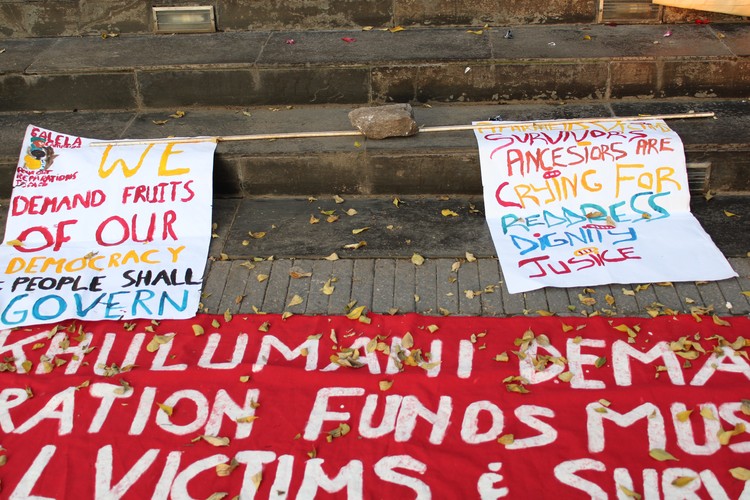
South Africa must revisit its approach to reparations, including by expanding access beyond the narrow confines of the TRC victim list, simplifying administrative processes, and investing in community-based programmes that address systemic inequality, writes Cathy-Ann Potgieter.
Transitional justice is key to building peace and stability in Sudan after years of impunity, especially in light of the current conflict between the Sudanese Armed Forces and the Rapid Support Forces, writes Abdelmageed Yahya.
Political instability, revolutions and repression characterised Tunisia’s fight for independence from Britain until 1956. Tunisia inherited a culture of impunity under its first Prime Minister and later first President Habib Bourguiba, whose main rival and pan-Arabist nationalist movement leader Ben Youssef was forced into exile and later assassinated in Germany. Bourguiba’s administration launched a campaign of...
Since achieving its independence from Britain on 9 October 1962, Uganda has had a tempestuous political history marked by civil wars, dictatorship, electoral authoritarianism, ethnic tension and military incursion. Arguably, it was the British colonial administration that provided fertile ground for political instability in Uganda through its divide and rule policy, a weak state apparatus...