On 22 September 1960, Mali, formerly French Sudan, declared independence from France with Modibo Keïta as its first president. Since then, the country has experienced ongoing political unrest and armed conflict. In November 1968, Lieutenant Moussa Traoré led a coup that overthrew Keïta, later establishing a military dictatorship under a single political party, the Democratic...
CSVR | CENTRE FOR THE STUDY OF VIOLENCE AND RECONCILIATION
Gadgets
View AllThe State of Eritrea and the Republic of Djibouti agreed to resolve their border dispute peacefully through mediation led by the State of Qatar. Both governments formally authorised His Highness Sheikh Hamad bin Khalifa Al-Thani, Emir of Qatar, to issue a binding resolution, affirming their commitment to third-party arbitration and international legal standards.
Qatar established a joint committee, chaired by its Prime Minister, with representatives from both countries. This body would appoint an independent international firm to demarcate the contested border per internationally recognised norms. Both Eritrea and Djibouti committed to submitting complete lists of prisoners of war and missing persons, enabling exchange and investigation under Qatar’s supervision.
The parties also agreed to submit all documentation necessary to support the demarcation process. The joint committee’s final decision on the boundary would carry binding authority, and Qatar would oversee its implementation. To reinforce legitimacy and transparency, Qatar would deposit the agreement with the United Nations, the African Union, and the League of Arab States.
The signatories committed to an immediate ceasefire and the launch of a disarmament, demobilisation and reintegration process for combatants. They also pledged to grant amnesty and security guarantees for returning exiles. All parties agreed to participate in an inclusive national dialogue to address key reforms, including army restructuring, constitutional amendments and preparations for democratic elections. International actors were to oversee the process to help secure lasting peace and stability in Chad.
The Parties agreed to terms regarding the final cessation of violence and normalisation of the relationships between the two organisations, with the goal of establishing terms for a united, non-racial and democratic South Africa. Agreed upon terms included: an end to political violence, a commitment to political tolerance and freedom of political activity, encouraging the free use of public facilities such as schools (in particular, facilities established for recreation and communal activities) regardless of political affiliation, acknowledging the peace-keeping role of security forces which requires forsaking political bias, appropriate training, respect and, lastly, the essential expedition of reconstruction and development programmes to reduce further potential violence.
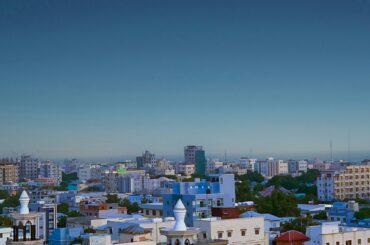
Lasting peace in Somalia requires addressing social grievances, healing past conflicts, and establishing a robust justice system, in addition to political reconciliation initiatives, writes Farhia Mohamud.
On 1 October 1960, Nigeria gained independence from Britain, with Alhaji Sir Abubakar Tafawa Balewa as the prime minister and the British monarch, Elizabeth II, as the constitutional head of state. On 1 October 1963, Nigeria became a republic, with Nnamdi Azikiwe as the first independent president. Since its independence, the country has struggled with persistent political crises, including military coups, secessionism, ethnoreligious violence, terrorism, and ongoing instability from banditry and herder-farmer conflicts.
On 21 November 1949, the United Nations General Assembly passed Resolution 289 V, calling for the unification and independence of Libya by 1 January 1952. The resolution comprised of a transitional period involving the United Nations Commissioner and the Council of Ten, including one representative from each province, one representative for Libyan minorities, and one representative from Egypt, France, Italy, Pakistan, Great Britain, and the United States, to guide Libya through the administrative transition and draw up a new constitution.