
Under the auspices of Libya’s Government of National Accord and with Tuareg tribal witnesses, the Tebu and Awlad Sulayman tribes signed a reconciliation agreement in Rome to end violent conflict and restore social cohesion. Both sides committed to reconciliation, reparations for victims, lifting social protections for perpetrators, and prosecuting individuals who violate the peace. The...
CSVR | CENTRE FOR THE STUDY OF VIOLENCE AND RECONCILIATION
Gadgets
View All
Integrating a transitional justice approach into climate finance negotiations and provision can help rectify historical wrongs, ensure fair distribution of resources, and support vulnerable populations in adapting to and mitigating the impacts of climate change, writes Augustine Njamnshi.

To ensure the lasting well-being and active citizenship of Sudanese survivors of conflict, international, state and civil society actors must integrate mental health and psychosocial support interventions into humanitarian, peacebuilding and transitional justice efforts, writes Amina Mwaikambo.

Transitional justice can be employed to address business-related human rights violations and a range of interrelated developmental and governance challenges in Africa, especially through the African Union’s Transitional Justice Policy, writes Bobuin Jr Valery Gemandze Oben.
In the context of competition over scarce resources, ethnic tensions and armed conflict, Somalia has been consumed by violence and gross human rights violations for the last five decades. On 1 July 1960, following a merger between the British Somaliland protectorate and the Italian Trust Territory of Somalia, Somalia was created in the Horn of Africa. For its first nine years of independence, the country enjoyed a parliamentary democracy under President Aden Abdullah Osman Daar (1960-1967) and his successor President Abdirashid Ali Shermarke (1967-1969), until Shermarke’s assassination on 15 October 1969. President of the National Assembly Sheikh Mukhtar Mohamed Hussein was meant to be Shermarke’s successor. However, on 21 October 1969, the transition of power was abruptly terminated by a military coup d’etat. The leader of the Supreme Revolutionary Council (SRC), Major General Mohamed Siad Barre, became president of Somalia and led a military government for the next 22 years.
Following centuries of occupation and colonisation by the Portuguese, Mozambique gained its independence in 1975. It became the People’s Republic of Mozambique after a decade of armed struggle led by the Front for the Liberation of Mozambique (Frente de Libertação de Moçambique, or FRELIMO) rebel group, commanded by Eduardo Mondlane. Upon independence, FRELIMO set up a Marxist-Leninist one-party government under the leadership of Samora Machel.
After years of British colonialism and later white minority rule, the liberation movements in Rhodesia achieved black majority rule with the signing of the Lancaster House Settlement in 1979. In March 1980, the country held its first democratic elections, resulting in Robert Mugabe, of the Zimbabwe African National Union-Patriotic Front (ZANU-PF) political party, becoming the first prime minister of Zimbabwe. Mugabe proceeded to establish an authoritarian regime characterised by one-party control and state-sanctioned violence and intimidation.

Marketing
View All
Women-led and gender-sensitive climate action is key to sustainable peace, political stability and greater socioeconomic equality in Africa, writes Mary Izobo.
Latest
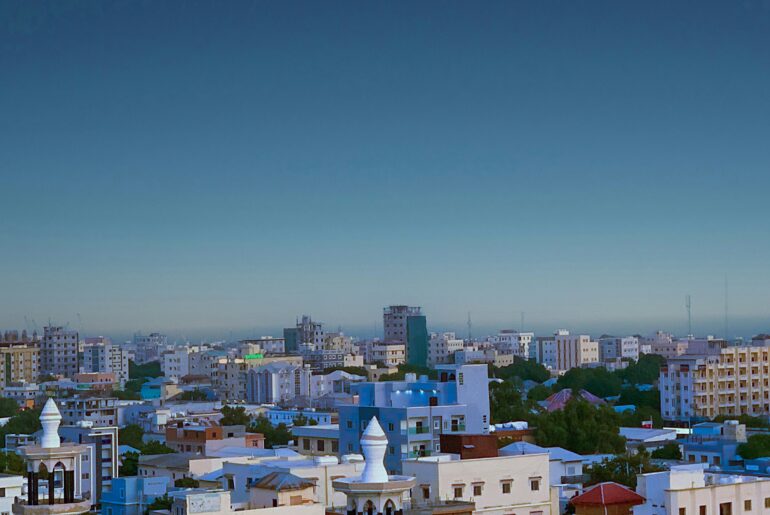
Lasting peace in Somalia requires addressing social grievances, healing past conflicts, and establishing a robust justice system, in addition to political reconciliation initiatives, writes Farhia Mohamud.
On 1 October 1960, Nigeria gained independence from Britain, with Alhaji Sir Abubakar Tafawa Balewa as the prime minister and the British monarch, Elizabeth II, as the constitutional head of state. On 1 October 1963, Nigeria became a republic, with Nnamdi Azikiwe as the first independent president. Since its independence, the country has struggled with...
On 21 November 1949, the United Nations General Assembly passed Resolution 289 V, calling for the unification and independence of Libya by 1 January 1952. The resolution comprised of a transitional period involving the United Nations Commissioner and the Council of Ten, including one representative from each province, one representative for Libyan minorities, and one...