
Ethiopia’s socio-political and economic crises are rooted in patronage and historically antagonistic ethnic, religious, and political relations. In 1895, Italy invaded Ethiopia, ensuing the first Italo-Ethiopian War. On 1 March 1896, Ethiopia overcame the invasion and won the war at the Battle of Adowa.[1] On 23 October 1896, the two warring parties signed the Treaty...
CSVR | CENTRE FOR THE STUDY OF VIOLENCE AND RECONCILIATION
Gadgets
View AllThe Parties to the Framework Agreement on Wealth Sharing agreed on equitable principles in relation to wealth sharing, including through transfers from the National Government to the Government of South Sudan. The Parties agreed that the wealth would be shared to promote the quality of life, dignity and living conditions of all the citizens without discrimination. The Parties agreed that Southern Sudan, and those areas in need of construction/reconstruction, would be brought up to the same average level of socio-economic and public services standard as the Northern states. The Parties agreed to establish a process to resolve the issue of land and natural resource ownership and to establish a National Land Commission as well as a Southern Sudan Land Commission, which would co-operate and co-ordinate their activities.
The Parties agreed that a peaceful and durable solution can only be achieved through frank and sincere dialogue, and affirmed that they would hold a general conference of all representatives of Darfur to discuss the political, economic and social situation with a view to finding a definitive solution to the conflict. The Parties agreed to establish a Joint Preparatory Commission to determine the agenda, participation, venue, etc. As part of creating conditions propitious to holding the Conference, the Parties agreed inter alia to liberate all prisoners of war and create conditions for the return and reintegration of refugees and IDPs.
The Parties to the Machakos Protocol agreed that the people of South Sudan have a right to self-determination, to govern affairs in their region and to participate equitably in the National Government. The Parties agreed to a six-year interim period, after which an internationally monitored referendum would take place for the people of South Sudan to vote for secession or unity. The Parties agreed that there would be freedom of belief, worship and conscience and that no one would be discriminated against on such grounds, and further that eligibility for public office and the enjoyment of all rights and duties would be based on citizenship and not on religion. To give effect to the right to self-determination, the Parties agreed on the political framework of governance in the Sudan, including by establishing the National Constitution as the supreme law. They agreed to establish a National Constitutional Review Commission to draft a Legal and Constitutional Framework to govern the Interim Period and undertake an inclusive Constitutional review. The Protocol made provision for a national government and national legislation to be applicable throughout the territory. The Parties agreed to formulate a resettlement, rehabilitation, reconstruction and development plan for areas affected by the war and to redress historical imbalances in resource allocation. The Parties also agreed to the sequence, time periods and processes for implementing the Peace Agreement. This provided for the establishment of the necessary institutions and other preparatory work during a Pre-Interim Period, followed by an interim period of six years, with progress in implementation tracked by an independent Assessment and Evaluation Commission.
The Parties agreed to the establishment of a Verification Mission to investigate, evaluate and report on alleged incidents involving serious violations against non-combatant civilians and civilian facilities. Provisions are made for the organisation and conduct of investigations by the Mission. The Verification Mission will issue an incident report, which will include both an analysis of the incident and, if a serious violation has taken place, recommended steps for the Parties to take to avoid similar incidents in the future. The Parties agreed that the most effective way to protect non-combatant civilians from attack is to bring the conflict to a close through the organisation of a comprehensive ceasefire and a negotiated peace agreement.
The Parties agreed to make every effort to disband and disarm terrorist groups and to prevent any acts of terrorism or hostile actions that might originate in the territory that might endanger the security of the other nation. The Parties agreed to join in a common effort to promote regional peace and to end the civil war in Sudan. The Parties agreed to refrain from hostile and negative propaganda campaigns against each other and to return all prisoners of war. The Parties agreed to condemn any abuse or injury of innocent citizens and in particular to make a special effort to locate abducted children and return them to their families and to facilitate the return and resettlement of refugees. The Parties agreed to offer amnesty and reintegration assistance to all former combatants who renounce the use of force. The Parties agreed to normalise diplomatic relations and establish a joint ministerial committee to implement the agreement.
The Parties agreed to respect international laws and customs regulating peaceful co-existence and good-neighbourly relations among countries and peoples, and respect the political choices of both countries and peoples, refraining from adopting a policy of exporting ideologies and seeking to impose them. The Parties agreed to refrain from hosting or organising regional or international conferences that aim to adopt policies or coordinate tasks posing a threat to the security and stability of neighbouring countries and agreed to resolve differences through peaceful means. The Parties established a joint committee to examine the remaining issues, especially those related to security, and implement the Agreement.

Marketing
View AllThe Parties to the Ceasefire Agreement agreed to the screening of UNRF II ex-combatants and their families for suitability of integration either in the Uganda People’s Defence Force (UPDF) or civilian life after the conclusion of the peace process. The Parties agreed that the UNRF II would prepare an agenda for the peace talks and send it to the Government for input, after which the parties would convene a peace talks conference. The Parties agreed on return of foreign-based UNRF II leaders. The Parties agreed that following the signing of the peace agreement, a Stakeholder Conference would be organised to facilitate the rehabilitation and resettlement of UNRF II ex-combatants. The Parties agreed to a DDR process for combatants not integrated in the UPDF.
Latest

Transitional justice policy making and processes in Africa need to address the economic consequences of conflict and violence, particularly for youth, in order to prevent their recurrence, writes Steven Rebello.

Delays in the implementation of South Sudan’s peace agreement are creating risk of renewed conflict and impunity, which can be addressed through citizen action, writes Emmanuel Ayoola.
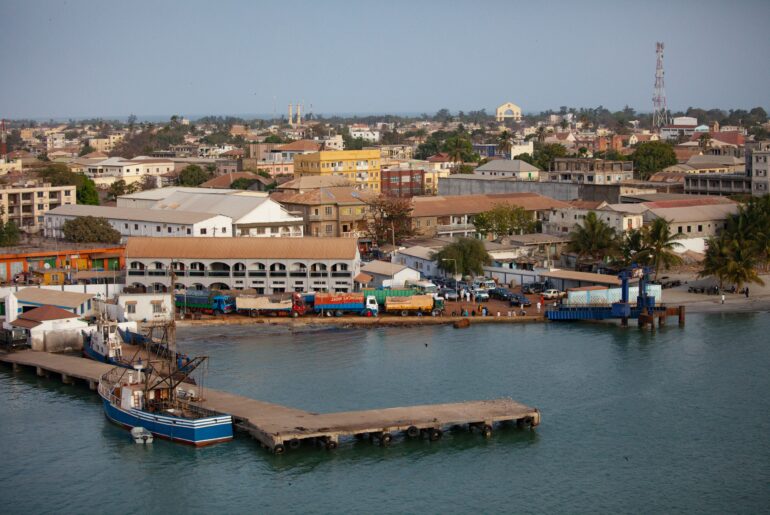
The recent release of the Government White Paper on the TRRC Report demonstrates the importance of applying a victim-centred approach to the search for and identification of the forcibly disappeared, writes Joyce Mutoka.