
Environmental restorative justice and epistemic justice are key to integrating ideas of transitional justice and restorative practices to tackle environmental harms and climate change in Africa, writes Saniah Matengu.
Climate change is a global crisis that deeply affects all of us, but its consequences are particularly severe on the African continent. Environmental restorative justice, coupled with epistemic justice, has emerged as a crucial way to address environmental harms and climate impacts.
The effects of climate change have been a long time coming, with many countries tracing their present-day environmental concerns back to the colonial legacies of centuries long past. Many of us cannot begin to imagine the environments and worlds that environmental exploitation has destroyed. Our relationship to our environments was altered many decades ago, and only now are we realising what has been lost. Although many initiatives, policies and programmes aim to mitigate the negative effects of environmental change, what is often overlooked is the impact on individuals and how much these changes affect their lives.
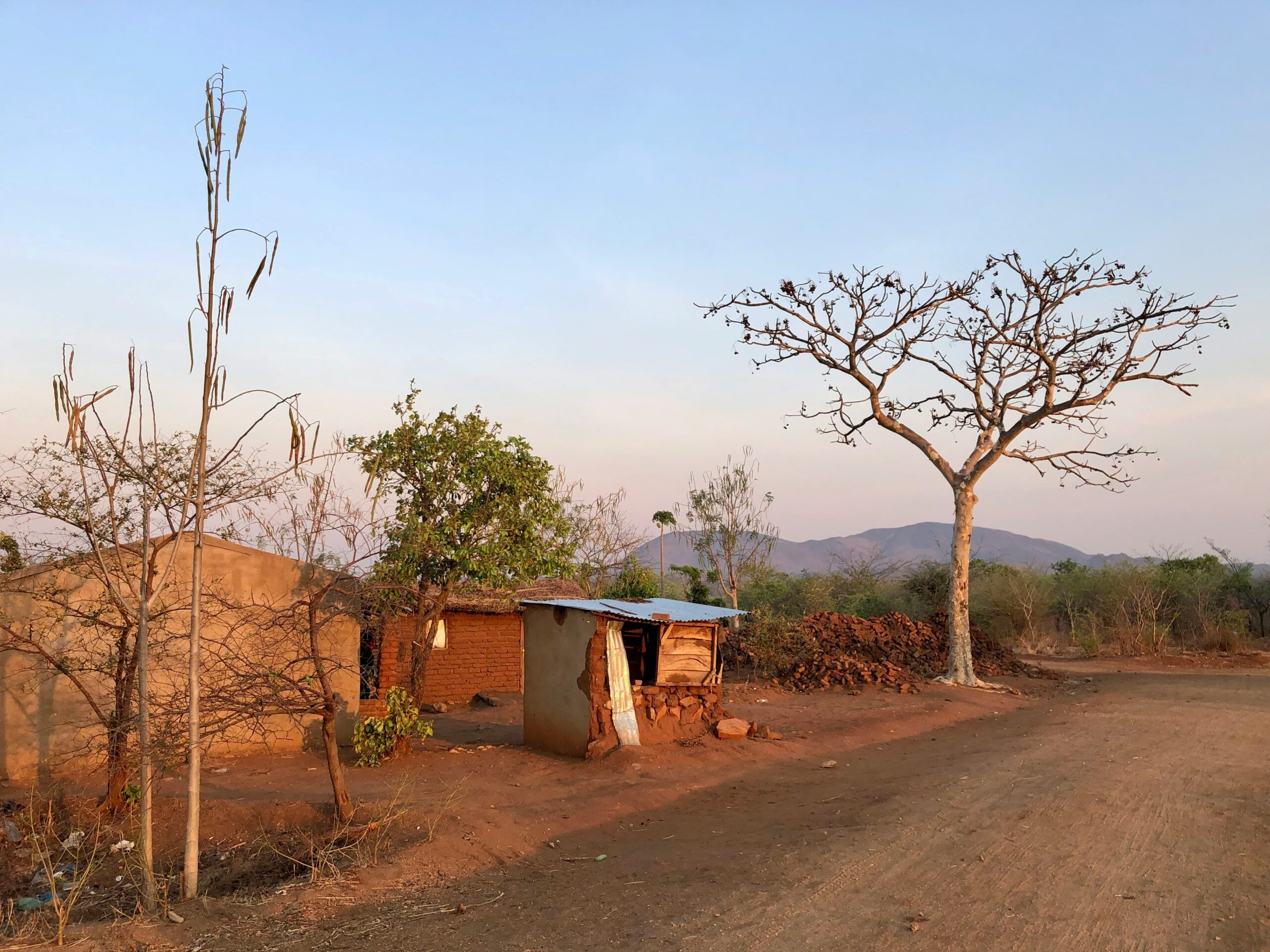
I conducted research in Malawi, focusing on how rural communities in the Salima district practice environmental protection. Residents in this region face significant environmental degradation, particularly deforestation and overfishing in Lake Malawi. Governments and societies typically struggle to balance the preservation of nature (as humans will depend on it for years to come) with the need to utilise resources to sustain people’s livelihoods. This issue is particularly pressing in African countries, such as Malawi, where individuals often rely on direct resource exploitation for survival.
From a resource management perspective, environmental protection aims to determine how people can continue to extract resources (endlessly) without depleting them. In Malawi, this has typically entailed planting new trees or programmes to breed more fish. However, there are approaches to environmental protection that foreground community-based methods as opposed to institutionally imposed, top-down policies. Such an approach envisions environmental protection being practiced at a smaller scale to accommodate local needs and make use of context-specific opportunities for conservation.
This could, for instance, include addressing and changing the behaviours that lead to environmental degradation in the first place, rather than focusing solely on the level of resources. When combined with a holistic approach, this strategy promises great potential to engage with climate change in a transformative manner, as I observed in the work of the NGO Ripple Africa in Malawi.
Environmental protection, in any approach, is based on humans’ relationships to their environment. While I understood this before beginning my research, I initially assumed that the people I interviewed would all think of the environment in similar ways that I do: as beautiful, yet damaged, and as a resource, but also a place to enjoy, which needed to be treated with care. I quickly realised that I had asked the wrong questions – an issue researchers face far more often than we like to admit.
What I was seeing and hearing could not be conceptualised as a relationship because people did not actually express having any connection to their environment. It was not there. Trees served as firewood, fish as a meal – they did not reflect an environment. So, I found that the more important questions should be: How can one recreate a relationship with the environment? And how can this offer an opportunity to combat climate change? I found that the principles of transitional justice and epistemic justice can guide us towards an answer.
Environmental restorative justice has emerged as a promising framework that integrates ideas of transitional justice and restorative practices to tackle environmental harms and facilitate healing and reparation. It offers a new perspective from which to evaluate events, policies and agendas, particularly regarding environmental harm and protection, as well as human–nature relationships.
This is done through a practice of combining an environmental sensibility with restorative justice, recognising the interconnectedness of human and ecological relationships. This approach calls for simultaneous engagement with the (identifiable) harms, the victims – individuals or groups – and institutions that take responsibility for causing damage and, importantly, for repairing it.
However, such an approach must go hand in hand with epistemic justice. Particularly within the aid industry, actors have yet to address epistemic injustices systematically. In Malawi, both the government and international aid have prioritised environmental protection for decades. However, little has changed because many initiatives fail to address the root causes. What is required is a sharing of knowledge by external actors and a co-production of solutions (new knowledge) with local beneficiaries, allowing citizens to meaningfully recreate a relationship with their environment.
Ripple Africa’s bottom-up approach in the Salima district has yielded results because it focuses first on assessing various factors that cause environmental degradation and then co-producing localised solutions. For instance, their tree planting initiative complements the rollout of fuel-efficient stoves (Changu Changu Moto, or “Fast fast fire”) that require far less firewood. To combat overfishing, especially during breeding season, communities created their own bylaws. These are a set of informal rules which are enforced by specialised committees made up of members of the very same community.
Thus, this approach combines both an environmentally restorative perspective and epistemic justice, while simultaneously fostering a sense of ownership within the community. Community members co-produce the knowledge created throughout the overall process, allowing for agency and trust in the transformation process.
In sum, community-based environmental protection practices that adopt an environmental restorative justice approach hold the potential to transform people’s relationships to their environment. The first step involves recognising the type of relationship that exists between the environment and the individual. The environmental restorative justice framework encourages a reflection on this, and then creates space to determine what changes are needed for it to better serve both people and their environment.
This necessarily calls for a reckoning with historical events and injustices, specifically colonialism and extractive capitalism. Knowledge plays a consistent role in this transformation, which is why such approaches should also always be designed with epistemic justice and epistemic delinking in mind.

Saniah Matengu
Saniah Matengu is a PhD researcher at the European University Institute.